Nutritional Supplements
Helpful or a Waste of Money?

A departure from Trump Critique today. Instead, I’ll swing back into a little health care, medical stuff. A while back I posted my opinion briefly about over the counter nutritional supplements and the deceptive advertising associated with them. I also complained about the danger of allowing advertising of prescription pharmaceuticals to the public (here).
Today I’ll focus on nutritional supplements and why you should be skeptical about spending your hard-earned dollars on many of them, with a few exceptions. I will not attempt to cover all of them, a herculean task indeed, but will point out a few of those widely advertised. Today’s topic: memory supplements.
Americans spend about $50-60 Billion on nutritional supplements each year, and the number is growing. Since both drugs and supplements are products designed to “help” folks who think they need something that their bodies and health are lacking, it is interesting to see how the regulatory state, the FDA, determines the difference. If a product claims to diagnose, cure, mitigate, treat, or prevent a disease, the FDA classifies it as a drug. Drugs must go through extensive testing in pre-market trials before being licensed to the public. And they must be proven effective and safe in those trials.
Nutritional supplements, on the other hand, more or less get a free pass. If the product is intended to supplement the diet, vaguely promote “well-being”, or “support organ or body function”, it does not have to go through FDA approval to prove efficacy and safety. As reported by Harvard health (here):
For instance, dietary supplements cannot make claims about treating specific conditions on their labels, like “lowers heart disease risk” or “protects against dementia.” Yet, the guidelines do allow for phrases like “promotes heart health” or “supports immunity.” (However, any such phrases must be followed by these words: “This statement has not been evaluated by the Food and Drug Administration. This product is not intended to diagnose, treat, cure, or prevent any disease.”)
“This kind of ambiguity means the sky’s the limit in terms of how manufacturers can present their products,” says Dr. Cohen. “And many people don’t realize the difference. They see ‘heart health’ and think it’s beneficial even though there may not be anything in the product that has shown effectiveness.”
I forced myself to watch a TV ad for Prevagen the other day. Because the product lacks any credible scientific evidence that Prevagen improves memory, the manufacturer was sued successfully by the FTC and New York for false and misleading advertising (here). So now, the ad for Prevagen does not say it improves memory, it merely claims that “Prevagen: for your brain.” But I think you would agree, it implies benefit when none has been proven.
Neuriva is another product that is advertised for memory enhancement. Many celebrities have given testimonials for its effectiveness. This product is not cheap. One month’s supply is about $50. And science for effectiveness is lacking as well. There was a prospective placebo-controlled study in 2023 that purported to show memory benefit, but the study was funded by the manufacturer, and outside experts thoroughly discredited the study on several criteria including data dredging (using multiple data tests until one finally suggested statistical significance). The manufacturer was sued successfully in 2021 (here) for false advertising and was forced to remove its claims of “clinically proven” and “Science-Proved” and changed to “clinically tested and “science-tested”. I would suggest that the language change was insufficient to dissuade users and other manufacturers from similar misleading ads.
Ginkgo Biloba is a third supplement marketed for memory enhancement as well as other conditions, including “circulation”, vertigo, anxiety. There is very little evidence it helps with any of these conditions, especially memory. Recent reviews found it ineffective for cognitive decline, or memory enhancement (here).
The manufacturers manage to sustain this $50 billion industry with clever marketing and loopholes in federal guidelines. The medical consensus is that there are no miracles in those bottles.
Most of these products are harmless taken as directed, except to your wallet. But some carry risk for real harm. Ginko Biloba can cause increased bleeding especially in folks who take anticoagulants (blood thinners). And it can interfere with some seizure medications. Other supplements ( e.g. St. John’s Wort) have interactions with liver enzyme pathways that metabolize medications, so significantly interfere with the medication’s effectiveness. Bottom line: users should list their supplements with their physician and pharmacist so that drug interactions can be avoided. Don’t assume they will be safe.
My advice if you are inclined to take a supplement (in addition to asking your physician) is to use an AI engine like Google’s Gemini or Perplexity and ask this question:
“Are there any placebo-controlled prospective randomized studies about the efficacy and safety of __________ .” (insert the product in the blank). And if you find any, be skeptical if they were funded by the manufacturer.
A science background is not essential to do this evaluation because the AI engine will give you ordinary language as well as cite the scientific study if you desire to take it further.
For me, this is another example of why we need appropriate regulatory agencies in government. Even with them as watchdogs, the manufacturers and business interests are overwhelming the regulatory apparatus and finding loopholes around it. And more and more of the regulators are being staffed with folks previously employed by the manufacturers or lobbyists on their behalf. Best to be cautious and do your homework.
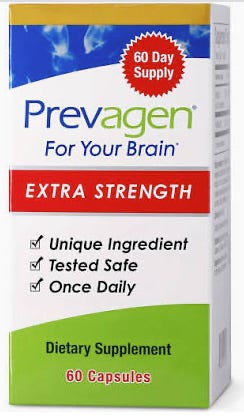
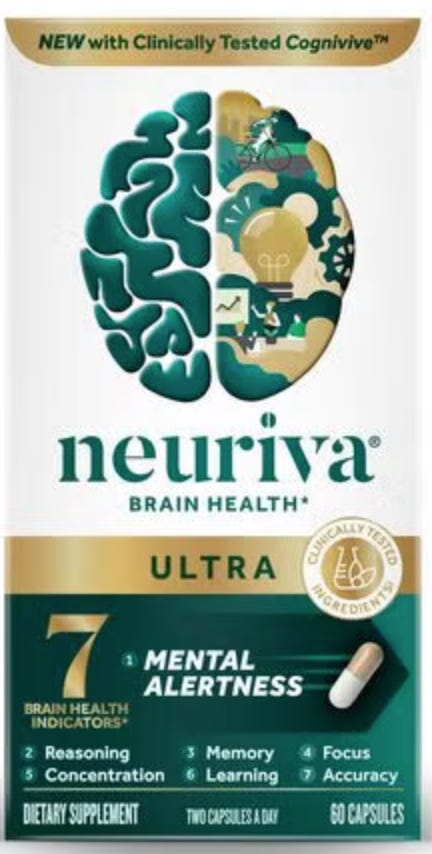
Here are the products, carefully skirting the Governmental guidelines to avoid another false advertising suit, but still conning potential buyers.